- Retail
- Corporate
- SME
- International
- Private
- MauBank Group
- Corporate Social Responsibility
- Service Point Locator
- Financial Statements
- News
- Careers
- Contact us
About MauBank
MauBank operates as a full-service commercial bank, offering a broad range of financial products and services designed to meet the needs of individuals, businesses, and international clients. Over the years, it has developed a reputation for combining traditional banking reliability with innovative and digital-driven solutions, helping it remain competitive in the evolving financial landscape of Mauritius.
The bank is majority-owned by MauBank Holdings Ltd, which is a wholly state-owned company. This government-backed ownership structure provides MauBank with a strong foundation of stability and public trust, while also aligning its operations with national economic development objectives. As a result, the bank plays an important role in supporting financial inclusion and economic growth in Mauritius.
The Board of Directors is responsible for the overall direction, supervision and control of the Bank. Specific responsibilities of the Board include laying down and approving the business objectives of the Bank, approving strategies and policies which need to be pursued in order to achieve these objectives, and reviewing on an on-going basis the performance of the Bank in relation to its stated objectives as well as adherence to policies.
Board Composition
The Board of Directors of MauBank Ltd consists of the following members:
Sanjay Matadeen is an economist and business consultant with over 25 years of experience in international trade, economic analysis, policy formulation, and private-sector development. He has held roles at Kemp Chatteris, Bank of Baroda, Enterprise Mauritius, and Middlesex University. He has worked with international organisations, including the European Union Delegation and the Commonwealth Secretariat, and has undertaken international assignments in Kenya, Tanzania, Uganda and the United Kingdom. He holds a BSc (Hons) in Economics, an MSc in Information Technology with Management, a Master of Business Administration (MBA), and an MSc in International Trade and Trade Law from Lund University, Sweden.

Ramduth Luchoo is a retired senior tax administration professional with over 35 years of experience in revenue management and public‑sector governance. He began his career in 1983 at the Income Tax Department, where he rose to the position of Principal Inspector of Taxes, and later served at the Mauritius Revenue Authority as Technical Officer until his retirement in 2019. He holds a B. Com (Hons) from Delhi University and an MBA from MANCOSA. His professional training includes advanced bookkeeping and accounts, personnel management, and internal auditing techniques. He led training programs for Revenue Officers with a view to enhancing expertise in tax assessments, auditing practices and effective policy implementation. Besides his unwavering commitment to public service, he is also engaged in various community policing initiatives. He brings to the Board extensive expertise in taxation, compliance, internal controls, and administrative processes.

Geerish Beeharry is a senior business leader with over 20 years of experience in project management, digital transformation, IT governance, and corporate governance across the hospitality sector. He currently serves as Project Manager at Constance Hotels & Resorts, where he has led complex infrastructure and technology projects across the Indian Ocean region. Throughout his career, he has implemented robust IT governance policies to enhance data security and reduce compliance risks, and brings relevant experience in risk management and regulatory compliance to the Board. He holds a BSc (Hons) in Computer Science from the University of Mauritius, a Certificate in High Impact Leadership from the Cambridge Institute for Sustainability Leadership, and is a Member of the Mauritius Institute of Directors.
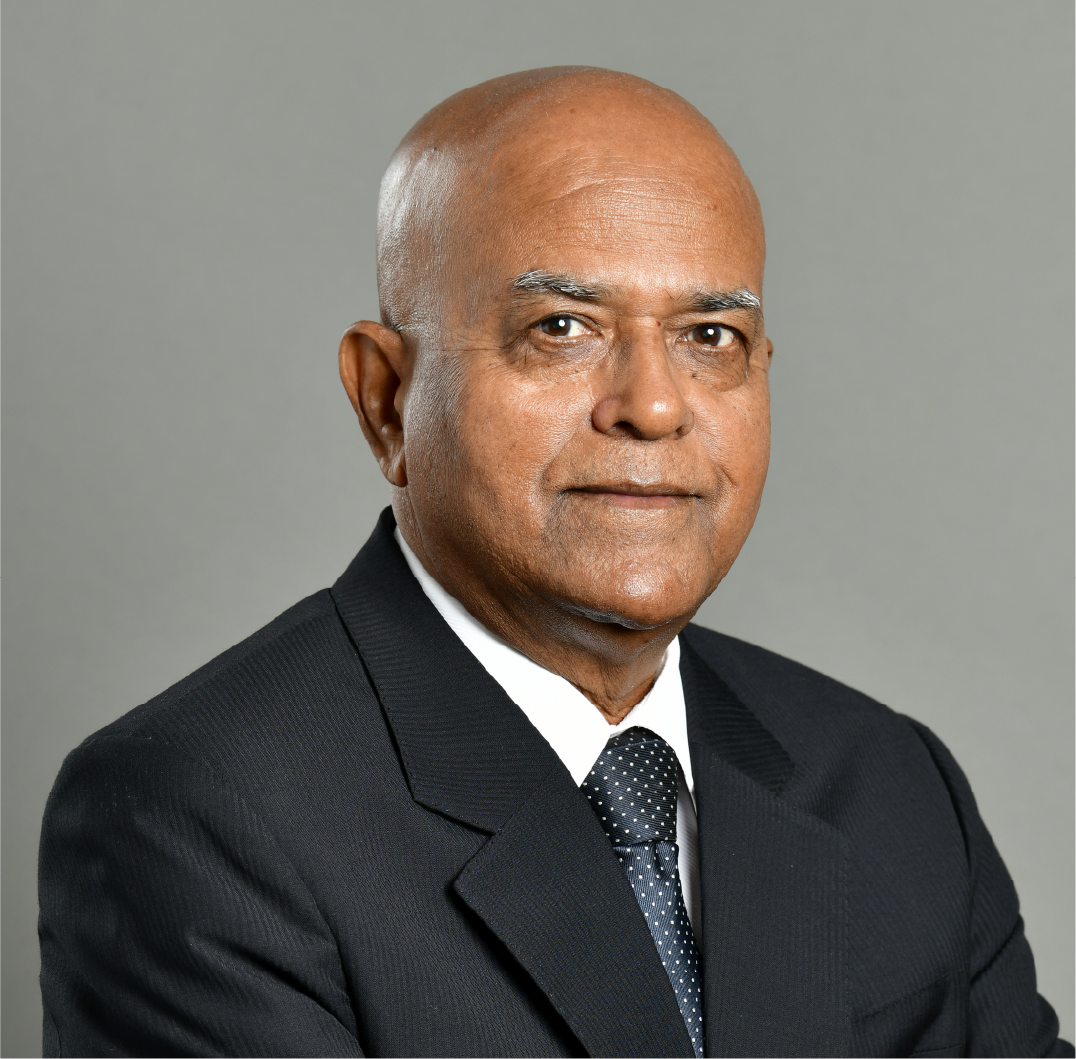
Anand Bhugun is a seasoned banking professional with over 43 years of experience within the SBM Group, having joined at its inception in 1973. He has held several senior leadership positions across both Banking and Non-Banking clusters, with strong expertise in operations management, credit, risk control, and service excellence. Mr. Bhugun has played a key role in major transformation initiatives, including credit transformation, change management, and core banking system implementation. He holds an MBA from Heriot-Watt University and is widely recognised for his integrity, strategic insight, and people-focused leadership.

Shahannah Abdoolakhan is the Founder and Chief Executive Officer of Abler Group, an independent risk and compliance advisory firm with operations in Mauritius and the UAE, supporting clients across Europe, the Middle East, Africa and offshore jurisdictions. She brings over 23 years of experience in financial crime compliance, governance and risk management, with deep expertise in AML/CFT and counter-proliferation financing. She has advised boards, financial institutions and global corporate service providers on complex regulatory and cross-border risk matters, including compliance transformation, regulatory remediation and governance frameworks. In addition to her executive role, Shahannah serves as a Non-Executive Director and Chair of Audit and Risk Committees, contributing strategic oversight, independent judgment and regulatory insight at board level. She is also an active contributor to industry dialogue on regulatory developments and financial integrity.

Dhrisraj Baboolall is a Legal Executive, holding an LLB (Hons) degree from Northumbria University, United Kingdom. He has over five years of professional experience in the legal field, with expertise in legal analysis and advisory support, regulatory matters, documentation and case management. He currently serves as Deputy Chairperson of the SILWF Board, contributing to community development initiatives through its community centres across Mauritius. He is also actively engaged in youth leadership and advocacy initiatives, promoting empowerment, civic participation and opportunities for young people.

Rooben Armoogum is a Chartered Accountant with over 20 years of international experience in finance, taxation, and corporate services. He has proven expertise in financial reporting, tax compliance, and business advisory, with a strong track record of supporting both local and global organisations, including FIFA. He currently manages a diverse client portfolio, acting in various capacities such as Director, Company Secretary, and Accountant, and provides tailored solutions for business structuring and regulatory compliance. His competencies include budgeting, forecasting, and risk management, underpinned by a pragmatic and commercially focused approach. He is committed to building strong stakeholder relationships and navigating complex regulatory environments, bringing a combination of technical expertise, leadership, and strategic insight to drive business performance and sustainable growth.

Yousouf Ramjan reckons more than fifty years of experience in the field of Accounting, Taxation and Auditing. He started his career working as an Accountant for 7 years at Lam Po Tang Co Ltd and then for 9 years at Bonair Group. He then started his own Accounting Firm in 1993 and has since then been the Accountant and Tax Advisor to several type of businesses, representing them at the Mauritius Revenue Authority and Assessment Review Committee (now Revenue Tribunal).

Corporate Governance involves a set of relationships between MauBank’s management, board, shareholders and other stakeholders. Effective corporate governance practices are essential to achieve and maintain high level of public trust and confidence in the banking system. The Bank is mainly guided by the Bank of Mauritius Guideline on Corporate Governance and the National Code of Corporate Governance on governance matters.
The Board of MauBank Ltd (‘Bank’) is fully committed to attaining and maintaining the highest standards of corporate governance. It has all the powers for managing, directing and supervising the Management of the business and affairs of the Bank.
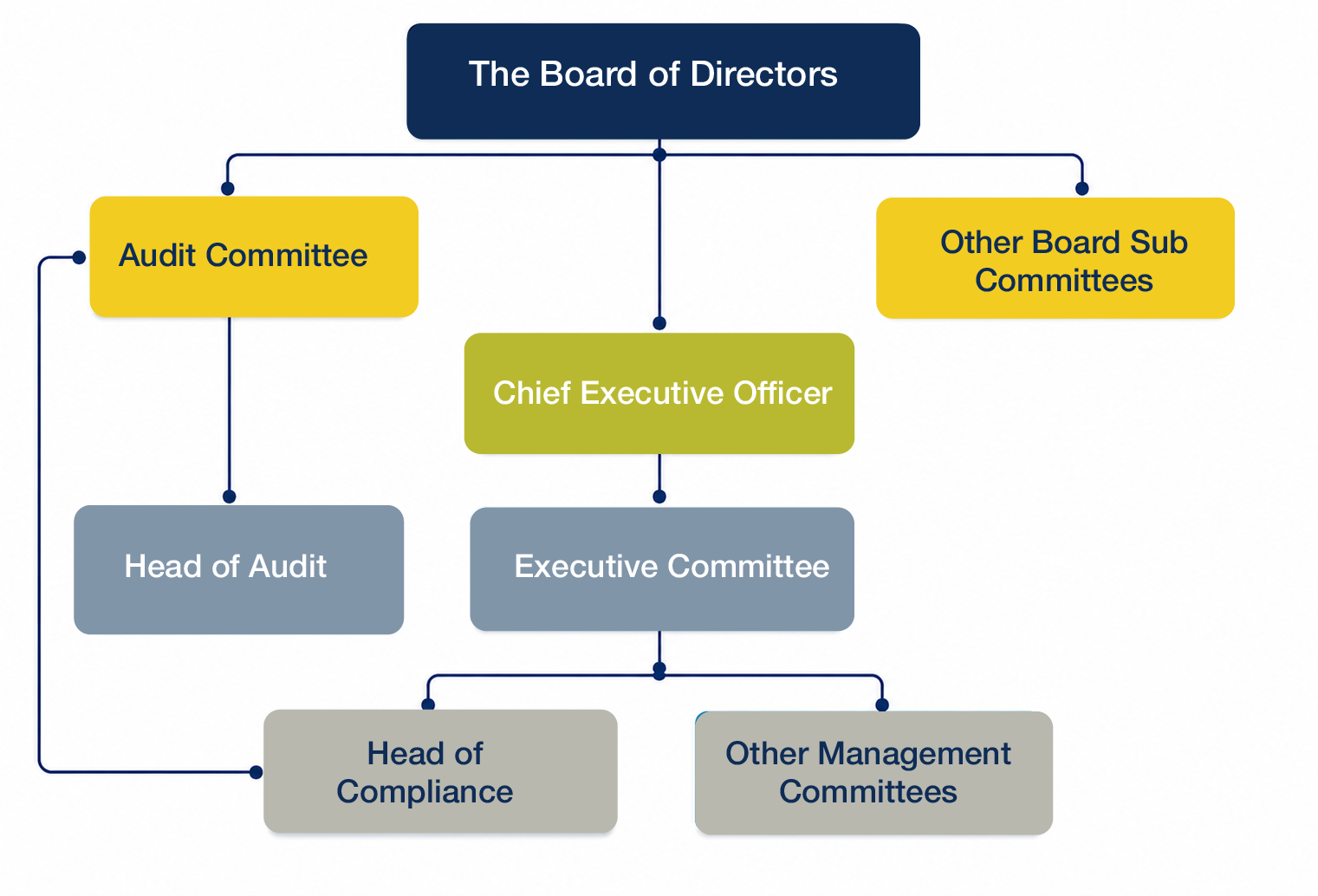
The Organisational Structure

The Board has constituted the following committees to assist effective implementation of its responsibilities;
The Audit Committee’s principle function is to oversee the Bank’s financial reporting process, monitor the internal control systems, review financial statements, provide support to the Board of directors on compliance, audit and financial matters, oversee performance of external and internal auditors of the Bank, and review internal and external inspection reports.
The Audit Committee shall be appointed by the Board and shall be made up of at least three (3) members who shall comprise of only independent directors.
The Audit Committee (AC) consists of the following members:
Responsibilities of the Audit Committee (AC)
The Audit Committee’s responsibilities, among others, include:
The Board Investment & Credit Committee (BICC) mandate is to act as the credit sanctioning authority of the Bank on behalf of the Board and ensure compliance to the Credit Risk Policy (“CRP”) of the Bank at all times. The Committee shall have the authority to make a final decision on approval or rejection of proposed requests/transactions as well as to establish general lending parameters in accordance with its powers.
Members of the Committee shall be appointed by the Board and shall be made up of at least three (3) members, consisting of a majority of independent or non-executive directors and may include the CEO.
The Board Investment & Credit Committee (BICC) consists of the following members:
Responsibilities of the Board Investment & Credit Committee (BICC)
The Board Investment & Credit Committee’s responsibilities, among others, include:
The Board Cybersecurity Committee (BCSC) is mandated by the Board to assist the Bank in fulfilling its cybersecurity risks management and control responsibilities. In doing so, the Committee will ensure cybersecurity is managed in a manner consistent with the Bank’s strategic objectives, regulatory requirements and its approved operational risk appetite. Members of the Committee shall be appointed by the Board and shall be made up of at least three [3] independent or non – executive members with a reasonable number having an adequate familiarity with. Information/cyber security. The Chief Executive Officer of the Bank shall be a member of the BCSC.
The Board Cybersecurity Committee (BCSC) consists of the following members:
Responsibilities of the Board Cybersecurity Committee (BCSC)
The role of the Board Risk Management Committee (BRMC) has the responsibility to advise the Board on the financial institution’s overall current and future risk appetite, tolerance and strategy and oversee Senior Management’s implementation of the risk appetite framework and reporting on the state of risk culture in the Bank.
Members of this Committee shall be appointed by the Board and shall be made up of at least three (3) independent or non-executive members with a reasonable number having an adequate familiarity with risk management. The Chief Executive Officer shall be a member of this Committee.
The Board Risk Management Committee (BRMC) consists of the following members:
Responsibilities of the Board Risk Management Committee (BRMC)
The Board Risk Management Committee’s responsibilities, among others, include:
The Nomination and Remuneration Committee (REMCO) has the responsibility of selecting competent and qualified personnel and making recommendations to the Board. The Committee aims to retain and attract qualified and experienced personnel for the smooth running of the organisation.
Members of the Committee shall be appointed by the Board and shall be made up of at least three (3) members, consisting of a majority of independent or non-executive directors.
The Nomination and Remuneration Committee (REMCO) consists of the following members:
Responsibilities of the Nomination and Remuneration Committee (REMCO)
The Nomination and Remuneration Committee’s responsibilities, among others, include:
The Board Procurement Committee reviews certain revenue and capital expenditures of the Bank to ensure that the Bank’s expenditure is appropriate in the pursuit of the Bank’s operations.
The Board Procurement Committee (BPC) consists of the following members:
Responsibilities of the Board Procurement Committee (BPC)
The Corporate Governance Committee (CGC) is responsible to determine, agree and develop the bank’s general policy on corporate governance in accordance with applicable Code of Corporate Governance and legislations. It should also ensure that the corporate governance report and disclosures to be published in the bank’s annual report is in compliance with provisions of the Code of Corporate Governance.
Members of the Committee shall be appointed by the Board and shall be made up of at least three (3) non-executive directors.
The Corporate Governance Committee (CGC) consists of the following members:
Responsibilities of the Corporate Governance Committee (CGC)
The Corporate Governance Committee’s responsibilities, among others, include:
Charter & Terms of Reference of the Board of Directors
September 2025
Approved by the Board of Directors on 25 September 2025
The Board has the ultimate responsibility for the safety and soundness of the Bank. It must oversee the Bank’s business strategy, internal organisation and governance structure, its risk management and compliance practices, and key personnel decisions. It is essential that there be a clear demarcation of responsibilities and obligations between the Board and Management. The Board should be independent from Management.
The Board and shall have a minimum of five (5) and a maximum of thirteen (13) members. 40 percent of the members shall be independent directors. The number and nature of directors shall at all times comply with the provisions of the Banking Act 2004.
The Board shall appoint the Chairperson of the Board who shall be an independent or a non-executive director
When the Chairperson is not an independent director, the Board shall be composed of at least 50 per cent of independent directors.
The CEO shall be a member of the Board but not its Chairperson.
A Board member may serve for a maximum term of six years. This limitation shall not apply to an Executive Director.
In the absence of the Chairman, the remaining members present shall elect one of the nonexecutive or independent members to chair the meeting.
The Chairperson of the Board shall not be a member of any Board Subcommittee
The Company Secretary or someone else nominated by the Board shall act as the Secretary to the Board.
A meeting of the Board may be held either:
The quorum necessary of the transaction of business shall be by a majority of directors. A duly convened meeting of the Board at which a quorum is present shall be competent to exercise all or any of the authorities, powers and discretions vested in or exercisable by the Board.
A resolution in writing, circulated and approved, by all the members shall be as valid and effectual as if it has been passed at a Board meeting duly called and constituted.
Every director has one vote. The Chairperson shall have a casting vote
A resolution of the Board is passed if it is agreed to by all directors present without dissent or if a majority of the votes cast on it are in favour of it.
A director present at a meeting of the Board is presumed to have agreed to, and to have voted in favour of, a resolution of the Board unless he expressly dissents from or votes against the resolution at the meeting.
A resolution in writing, signed or assented to by all directors then entitled to receive notice of a Board meeting, is as valid and effective as if it had been passed at a meeting of the Board duly convened and held.
Any such resolution may consist of several documents (including facsimile or other similar means of communication) in like form each signed or assented to by one or more directors.
A copy of any such resolution must be entered in the minute book of Board proceedings.
The Board shall meet:
Meetings of the Board shall be convened by the Company Secretary (or designate) as per section 8.1 above. The notice of each meeting of the Committee, confirming the venue, time and date and enclosing an agenda of items to be discussed, shall, subject to paragraph 9.2, be forwarded to each member of the Board with at least 2 days’ notice
The minimum notice period required to convene meetings of the Board under paragraph 9.1 may be waived, where all the members entitled to receive notice of meetings agree to the waiver
The Company Secretary (or designate) shall minute the proceedings and resolutions of all Board meetings, including the names of those present and in attendance
Minutes of the Board proceedings shall be reported to the Board at its next meeting for approval.
The Board has responsibility for the matters set out below:
Strategy and Management Supervision
Provide strategic direction to the Bank.
Approve the Bank’s corporate plan covering short-term and long-term business objectives and strategy together with appropriate policies to execute the strategy, including those relating to risk management, capital adequacy, liquidity, risk appetite, compliance, internal controls, communication policy, director selection, and orientation and evaluation.
Appoint and monitor senior management, question and scrutinise its performance in the achievement of corporate objectives
Require Management to review periodically the effectiveness of the established corporate plan and report results to the Board.
Approve the Banks’s annual operating plan and ensure that the operations are conducted prudently and in line with the laws and Board approved policies and that any deviations are reported to the Board.
Oversee the management of the business and affairs of the Bank ensuring:
Review the performance of the Bank in the light of its strategy, objectives, plans and budgets and ensure that any necessary corrective action is taken.
Approve any extension of the Bank’s activities into new business or geographic areas.
Capital
Approve the capital and operating budgets of the institution, capital adequacy assessment process, capital and liquidity plans.
Review and approve proposals for the allocation of capital and other resources within the Bank.
Financial Reporting
Responsible for the preparation and fair presentation of the Bank’s financial statements in accordance with International Financial Reporting Standards and in compliance with the requirements of the Mauritius Companies Act and Banking Act.
Approve the Bank’s financial statements, annual report and accounts.
Approve any significant changes to accounting policies or practices.
Compliance, Risk and Internal Control
In keeping with BOM Guideline on Maintenance of Accounting and Other Records and Internal Control Systems, maintain a sound system of compliance, internal control and risk management including:
Major Contracts and Engagements
Approve material acquisitions and disposals of businesses, assets or shares which are outside the ordinary course of business of the Bank and significant in terms of the business of the Bank.
Board Sub-committees
The Board shall establish specialized Board Sub-committees as appropriate. To this end the Board currently has the following Sub-committees to which it may delegate some of its duties:
The Board shall set out the terms of reference of each Sub-committee of the Board and shall also determine its composition. The terms of reference and composition of the Committees are posted on the Bank's website.
Question, scrutinise and monitor the performance of board Sub-committees, and individual directors.
Establish review and agree changes as appropriate to the terms of reference of the Sub-Committees of the Board.
Receive the minutes of and/or reports from the Sub-Committees.
Board Membership and Other Appointments
Review the structure size and composition of the Board and its Sub-committees from time to time and make any changes deemed necessary.
Approve the organisation structure of the Bank, and its staff compensation policies.
Delegation of Authority
Approve delegated authorities for expenditure, day to day operations, and for lending and for other risk exposures.
Others
Ensure that there is a clear demarcation of duties and responsibilities between the Board and Management in order to implement an effective accountability regime. The Board should periodically hold Board meetings where Management officials are not present.
The Board will set out the criteria for measuring the CEO’s performance in achieving the approved corporate objectives. Such performance review shall be conducted annually. The CEO is responsible for implementing a performance and accountability regime for senior management personnel.
The Board (or by delegation, its Nomination and Remuneration Committee) shall implement a remuneration and incentive system to stimulate staff motivation to achieve the corporate objectives. The approach shall be reviewed periodically to assess its effectiveness and decide on any modifications, as necessary.
In compliance with section 48 of the Banking Act 2004 dealing with the disclosure of interest, the Board shall implement policies and procedures to identify conflict of interest situations and steps to redress such situations. This shall include:
Board member shall immediately report to the Chairperson of the Board any conflict of interest or potential conflict of interest and shall provide all relevant information, including information concerning his or her spouse, registered partner or other life companion, foster child and relatives by blood or marriage up to the second degree. The Board member concerned shall not take part in the assessment by the Board of whether a conflict of interest exists. A Board member shall also not take part in any discussion or decision-making regarding any subject or transaction in which he/she has a conflict of interest with the Bank. A Board member shall, forthwith after becoming aware of the fact that he is interested in a transaction or proposed transaction with the Company, cause to be entered in the interests register. Related-party transactions shall be disclosed in line with the Bank’s Related Party Transactions Policy.
The Board's primary responsibility is to protect the interests of the Bank, and it should ensure that the decisions of the holding company/Head Office are not detrimental to the sound and prudent management of the Bank, its financial health and the legal interests of its stakeholders.
The Board should ensure that members participate in induction programmes and have access to ongoing training on relevant issues which may involve internal or external resources.
The Board shall, review its own performance, constitution and terms of reference to ensure it is operating at maximum effectiveness, from time to time, at least once every three (3) years.
The Board shall report to the Shareholder/s at the Annual Meeting on matters of the Bank within its duties and responsibilities.
Charter & Terms of Reference
September 2025
Approved by the Board of Directors on 12 September 2025
Purpose and Authority
The Audit Committee is established to assist the Board of Directors in fulfilling its oversight responsibilities related to financial reporting, internal controls, risk management, compliance, and internal and external audits. The committee ensures the integrity of financial statements, the effectiveness of internal controls, and adherence to regulatory requirements, in line with Bank of Mauritius Guideline on Corporate Governance and the National Code of Corporate Governance for Mauritius (2016).
The Audit Committee shall be authorized to:
Members of the Committee shall be appointed by the Board and serve a term as determined by the Board
and shall be made up of at least three [3] members, who shall comprise only of independent n on-executive directors.
Members of the Committee should preferably have financial background and be conversant with both
International Auditing Standards and International Financial Reporting Standards.
Appointments to the Committee shall be for such period as determined by the Board and may be
extended as the Board thinks fit.
The Board shall appoint the Committee Chairperson who shall be an independent non-executive director other than the Chairman of the Board. In the absence of the Committee Chairman, the remaining members present shall elect one of the members to chair the meeting.
Audit Committee members should avoid concurrent membership in the Board Investment and Credit
Committee (BICC) and the Board Risk Management Committee (BRMC) to maintain independence and
prevent conflict of interest, but exceptions may be made with safeguards if the Board’s composition
imposes constraints.
The Chairperson of the Board, the CEO/Executive director shall not be eligible to be appointed as Chairperson or member of the Committee.
The Board shall have the power at any time to remove any members from the Committee and to fill any vacancies created by such removal.
Membership to the Audit Committee shall be for an indeterminate period contingent upon the member maintaining his/her independent status or unless otherwise removed by the Board.
The committee shall ensure its members undergo ongoing training to stay updated on governance, regulatory, and financial reporting developments.
The Chief Executive Officer and the Head of Internal Audit shall be invited to attend the Committee meetings as standing invitees. The Chief Risk Officer, Chief Financial Officer and Head (or Officer-In Charge) of Compliance, or other persons from the Bank may be invited to attend for all or part of any meeting, as and when appropriate.
The External Auditors of the Company may be invited to attend Audit Committee meetings.
The Audit Committee shall have private meetings with the Head of Internal Audit and external auditor at least once a year, without management being present, to discuss the auditor’s remit and any issues arising from their audit.
The Company Secretary or someone else nominated by the Board shall act as the Secretary to the Committee.
The quorum necessary for the transaction of business shall be by a majority of the members. A duly convened meeting of the Committee at which a quorum is present shall be competent to exercise all or any of the authorities, powers and discretions vested in or exercisable by the Committee.
The Committee shall meet:
A resolution in writing, circulated and approved by all the members shall be as valid and effectual as if it has been passed at a Committee meeting duly called and constituted.
Meetings of the Committee shall be convened by the Company Secretary or the designate of the Committee at the request of the Chairman of the Committee. The notice of each meeting of the Committee, confirming the venue, time and date and enclosing an agenda of items to be discussed, shall, subject to paragraph 6.2, be forwarded to each member of the Committee with at least 3 working days’ notice.
The minimum notice period required to convene meetings of the Committee under paragraph 6.1 may be waived, where all the members entitled to receive notice of meetings agree to the waiver.
The Company Secretary, and/or the designate minutes taker/s, shall minute the proceedings and resolutions of all Committee meetings, including the names of those present and in attendance;
The draft minutes of Committee meetings shall be referred to the Committee Chairperson for review;
The draft minutes of the Committee meetings shall thereafter be circulated to members of the Committee for approval at the next Committee meeting;
Minutes of the Committee meetings shall be reported to the Board at its next meeting to allow other directors to be informed and seek clarifications, if they so desire.
The Duties of the Committee shall be to:
approve the risk-based audit plans of the internal and external auditors which shall address all activities over a measurable cycle and ensure that the work of external and internal auditors is coordinated.
approve the annual risked-based Compliance programme of the Compliance Function
recommend to shareholders, through the Board, the appointment, re-appointment, removal, and remuneration of external auditors. It should approve the engagement letter setting out the scope and terms of external audit.
approve the remuneration of the Head of Internal Audit.
assess periodically the skills, resources, and independence of the external audit firm and its practices for quality control.
assess whether the accounting practices of the auditee are appropriate and within the bounds of acceptable practice.
ensure that there is appropriate structure in place for identifying, monitoring, and managing compliance risk as well as a reporting system to advise the Committee and the Board of instances of non-compliance on a timely basis.
Encourage consultation between internal and external auditors.
discuss with senior management and external auditors the overall results of the audit, the quality of financial statements and any concerns raised by external auditors. This should include:
Responsibilities of the Committee include:
Examine and review the quality and integrity of the financial statements of the Bank, including its annual and half-yearly reports, interim reports and any other formal announcement relating to the Bank’s financial performance, before their approval by the Board;
Review and report to the Board on significant financial reporting issues and judgements which these financial statements contain having regard to matters communicated to the committee by the auditor. In particular, the committee shall review and challenge where necessary on;
Narrative reporting Where requested by the Board, the committee shall review the content of the annual report and accounts and advise the Board on whether, taken as a whole, it is fair, balanced and understandable and provides the information necessary for shareholders and other stakeholders to assess the Company’s performance, business model and strategy.
Keep under review the adequacy and effectiveness of the Bank’s systems of internal control, including internal financial control and business risk management and maintaining effective internal control systems.
Review any transactions brought to its attention by auditors or any officers of the Bank, or that might otherwise come to its attention, which might adversely affect the financial condition of the Bank
Report to the Board on the conduct of its responsibilities in frequency specified by the board, with particular reference to section 39 of the Banking Act 2004.
Ensure that management is taking appropriate corrective action in response to deficiencies identified by the auditors, including internal control weaknesses and instances of non-compliance with laws.
In respect of AML/CFT matters reported to the Committee, follow up in a consistent manner to ensure that corrective actions are implemented in a timely manner on the deficiencies noted during the audit performed by the Internal Audit Function, including any breaches of policy or procedure, regulatory or legislative requirement in line with s.5.37 of the Bank of Mauritius Guideline on AML/CFT.
Communicate with the Head of Internal Audit to understand how the internal audit function is fulfilling its mandate.
Communicate to the board’s perspective on the organisation’s strategies, objectives and risks to assist the Head of Internal Audit with determining internal audit priorities.
Set expectations with the Head of internal audit for the frequency with which the committee wants to receive communications from the Head of Internal audit.
Set criteria for determining which issues should be escalated to the committee, such as significant risks that exceed the board’s risk tolerance or any other matter of importance to the Board. An escalation process needs to be set.
The process for escalating matters of importance to the committee.
Approve the appointment or termination of appointment of the Head of Internal Audit;
Review and approve the charter of the internal audit function and ensure the function has the necessary resources and access to information to enable it to fulfil its mandate, and is equipped to perform in accordance with appropriate professional standards for internal auditors.
Ensure the Head of Internal Audit has direct access to the Board Chairperson and to the Audit Committee Chairperson, and is accountable to the Audit committee.
Ensure that the Head of Internal Audit attend and report at all Audit Committee meetings.
Review and assess the annual internal audit work plan.
Receive a report on the results of the internal auditor's work on a periodic basis.
Review and monitor management's responsiveness to the internal auditor's findings and recommendations;
Gain an understanding of the effectiveness of the organization’s governance, risk management, and control processes based on the results of internal audit engagements and discussions with senior management.
Meet with the Head of Internal Audit at least once a year without the presence of management.
Discuss with Head of Internal Audit on disagreements with senior management or other stakeholders and provide support as necessary to enable the Head of Internal Audit to perform the responsibilities outlined in the internal audit mandate.
Monitor and review the effectiveness of the Bank's internal audit function, in the context of the Bank's overall risk management system.
Ensure that the internal audit function is staffed with persons holding the relevant qualifications from recognised professional bodies (e.g the Institute of Internal Auditors ‘IIA’ or ACCA)
Safeguard the Bank's assets against unauthorised use or disposal.
Direct and supervise investigations into matters within its scope, for example, evaluations of the effectiveness of the Bank's internal control, cases of employee fraud, misconduct or conflict of interest.
Give prior approval to any non-audit services being provided by the External Auditor of the Bank while ensuring that the non-audit work does not entail any conflict with the audit work.
Approval of their terms of engagement, including any engagement letter issued at the start of each audit and the scope of the audit.
Assessing annually their independence and objectivity taking into account relevant professional and regulatory requirements and the relationship with the auditor as a whole, including the provision of any nonaudit services.
Satisfying itself that there are no relationships (such as family, employment, investment, financial or business) between the auditor and the Bank (other than in the ordinary course of business) which could adversely affect the external auditor ’s independence and objectivity.
Monitoring the auditor’s compliance with relevant ethical and professional guidance on the rotation of audit partner, the level of fees paid by the organization compared to the overall fee income of the firm, office and partner and other related requirements.
Assessing annually the qualifications, expertise and resources of the auditor and the effectiveness of the audit process, which shall include a report from the external auditor on their own internal quality procedures;
Meet regularly with the external auditor (including once at the planning stage before the audit and once after the audit at the reporting stage) and at least once a year, without management being present, to discuss the external auditor’s remit and any issues arising from the external audit.
Review and approve the annual audit plan and ensure that it is consistent with the scope of the audit engagement, having regard to the seniority, expertise and experience of the audit team.
Consider whether any significant ventures, investments or operations are not subject to external audit.
Obtain assurance from the external auditor(s) that adequate accounting records are being maintained.
Review the findings of the audit with the external auditor. This shall include but not be limited to the following:
Review any representation letter(s) requested by the external auditor before they are signed by management.
Review the management letter and management's response to the auditor's findings and recommendations.
Develop and implement policy on the supply of non-audit services by the external auditor to avoid any threat to auditor objectivity and independence, taking into account any relevant ethical guidance on the matter.
Review the adequacy and security of the Bank’s arrangements for its employees and contractors to raise concerns, in confidence, about possible wrongdoing in financial reporting or other matters. The committee shall ensure that these arrangements allow proportionate and independent investigation of such matters and appropriate follow up action.
Review the Company’s procedures for detecting fraud;
Review the Company’s systems and controls for the prevention of bribery and receive reports on noncompliance.
Review regular reports from the Compliance Officer and keep under review the adequacy and effectiveness of the Company’s compliance function.
Review significant transactions not directly related to the Bank’s normal business as the committee might deem appropriate; and
Review significant cases of employee conflicts of interest, misconduct or fraud, or any other unethical activity by employees or the Bank.
Monitor the implementation of the Bank's Code of Conduct and Ethics;
Review any statements on business conduct and ethical standards or requirements for the Bank and assisting in developing such standards and requirements.
Ensure compliance with the requirements of the articles of association; laws and regulations of any other applicable statute and of controlling bodies.
Identify any violations of ethical conduct; and
Give recommendations on any potential conflict of interest or questionable situations of a material nature.
The Committee Chairman shall report to the Board on the Committee’s proceedings after each meeting on all matters within its duties and responsibilities.
The Committee shall make whatever recommendations to the Board it deems appropriate on any area within its remit where action or improvement is needed.
The Committee shall review its constitution and terms of reference to ensure it is operating at maximum effectiveness and recommend any changes it considers necessary to the Board for approval, at least once every three years.
The Committee is authorised to seek any information it requires from any employee of the Bank in order to perform its duties.
The Committee is authorised to obtain outside legal or other professional advice on any matters within its terms of reference, at the Bank’s expense and submit for notification / ratification / approval of the Board as and when required.
Terms of Reference
September 2025
Approved by the Board of Directors on 25 September 2025
Members of the Committee shall be appointed by the Board and shall be made up of least three [3] members, consisting of a majority of independent or non-executive directors.
Only members of the committee have the right to attend committee meetings. Other individuals may be invited to attend for all or part of any meeting as and when appropriate.
Appointments to the Committee shall be for such period as determined by the Board and may be
extended as the Board thinks fit.
The Board shall appoint the Committee Chairperson who shall be an independent non-executive director. In the absence of the Committee Chairperson the remaining members present shall elect one of their numbers to chair the meeting who would qualify under these terms of reference to be appointed to that position by the Board.
The Chairperson of the Board shall not be Chairperson of the REMCO or the Chairperson of any subcommittee of the Board.
The Company Secretary or someone else nominated by the Committee shall act as the Secretary to the Committee and will ensure that the Committee receives information and papers in a timely manner to enable full and proper consideration to be given to the issues.
The quorum necessary for the transaction of business shall be by a majority of members. A duly convened meeting of the Committee at which a quorum is present shall be competent to exercise all or any of the authorities, powers and discretions vested in or exercisable by the Committee.
The Committee shall meet at least once a year or otherwise:
A resolution in writing signed by all the members shall be as valid and effectual as if it has been passed at a Committee meeting duly called and constituted.
Meetings of the Committee shall be summoned by the Secretary of the Committee at the request of the Chairperson of the Committee. The notice of each meeting of the Committee, confirming the venue, time and date and enclosing an agenda of items to be discussed, shall, subject to paragraph 5.2, be forwarded to each member of the Committee with at least 2 working days’ notice.
The minimum notice period required to summon meetings of the Committee under paragraph 5.1 may be waived, where all the members entitled to receive notice of meetings agree to the waiver.
Meetings of the Committee shall be summoned by the Secretary of the Committee at the request of the Chairperson of the Committee. The notice of each meeting of the Committee, confirming the venue, time and date and enclosing an agenda of items to be discussed, shall, subject to paragraph 5.2, be forwarded to each member of the Committee with at least 2 working days’ notice.
The minimum notice period required to summon meetings of the Committee under paragraph 5.1 may be waived, where all the members entitled to receive notice of meetings agree to the waiver.
The Chairperson of the Committee or his duly appointed representative shall attend the Annual Meeting in order to respond to questions from Shareholders on the Committee’s activities, if any.
The Duties of the Committee shall be to:
recommend to the Board candidates for Board positions, including the chair of the Board and chairs of the Board committees;
recommend criteria for the selection of Board members and criteria for the evaluation of their performance;
prepare for approval of the Board the remuneration and compensation package for directors, senior managers, and other key personnel, taking into account the soundness of risk taking and risk outcomes as well as any relevant information available on industry norms. No director or senior manager shall be involved in any decisions as to their own remuneration;
recommend to the Board an incentive package, as necessary, to enhance staff performance, while ensuring that incentives embedded within remuneration structures do not incentivize staff to take excessive risk;
recommend nominees for Board committees; and
comment on the contribution of individual directors to the achievement of corporate objectives as well as on the regularity of their attendance at the Board and committee meetings.
ensure effective human resource policies and strategies that support the Bank’s values, vision and mission;
set the over-arching objectives, principles and parameters of remuneration and talent management policy across the Bank;
approve remuneration and compensation frameworks, reward, talent management and performance appraisal structures;
review and approve design of pensions and other benefits;
establish formal, clear and transparent evaluation of criteria for current directors;
recommend nominees for each Board committee;
assess the effectiveness of the Board and direct the process of renewing and replacing board members;
Reporting Responsibilities
The Committee Chairperson shall report to the Board on its proceedings after each meeting on all matters within its duties and responsibilities.
The Committee shall make whatever recommendations to the Board it deems appropriate on any area within its remit where action or improvement is needed.
The Committee Chairman shall report to the Board on the Committee’s proceedings after each meeting on all matters within its duties and responsibilities.
The Committee shall make whatever recommendations to the Board it deems appropriate on any area within its remit where action or improvement is needed.
The Committee shall, review its own performance, constitution and terms of reference to ensure it is operating at maximum effectiveness and recommend any changes it considers necessary to the Board for approval, at least once every 3 years.
The Committee is authorised to seek any information it requires from any employee of the Bank in order to perform its duties.
The Committee is authorised to obtain, at the Bank’s expense, outside legal or other professional advice on any matters within its terms of reference, subject to the approval of the Board of the Bank.
Terms of Reference
June 2025
Approved by the Board of Directors on 24 June 2025
Reference to “the Committee” shall mean the Board Risk Management Committee (‘BRMC’ or ‘Committee’) of MauBank Ltd (the “Bank”). Reference to “the Board” shall mean the Board of Directors of the Bank.
Purpose and Authority
The BRMC derives its mandate from the Board with the responsibility for advising the Board on the financial institution’s overall current and future risk appetite, overseeing senior management’s implementation of the risk appetite framework and reporting on the state of risk culture in the Bank.
Members of the Committee shall be appointed by the Board and shall be made up of at least three [3] independent or non-executive members with a reasonable number having an adequate familiarity with risk management.
The Chief Executive Officer of the Bank shall be a member of the Committee.
Appointments to the Committee shall be for such period as determined by the Board and may be extended as the Board thinks fit.
The Board shall appoint the Committee Chairperson who shall ideally be an independent director but who shall not be the Chairperson of the Board. In the absence of the Committee Chairperson, the remaining members present shall elect one of their members to chair the meeting.
To maintain their independence and prevent conflict of interest, members of the BRMC should avoid concurrent membership in the Audit Committee and in the Board Investment Credit Committee (BICC), but exceptions may be made with safeguards if the Board’s composition imposes constraints.
The Chief Risk Officer shall attend the Committee meetings.
Other persons from the Bank may be invited to attend for all or part of any meeting, as and when appropriate.
The Company Secretary or someone else nominated by the Committee shall act as the Secretary of the Committee.
The quorum necessary for the transaction of business shall be by a majority of members A duly convened meeting of the Committee at which a quorum is present shall be competent to exercise all or any of the authorities, powers and discretions vested in or exercisable by the Committee.
The Committee shall meet: -
A resolution in writing, circulated and approved by all the members shall be as valid and effective as if it has been passed at a Committee meeting duly called and constituted.
Meetings of the Committee shall be convened by the Secretary of the Committee at the request of the Chairperson of the Committee. The notice of each meeting of the Committee, confirming the venue, time and date and enclosing an agenda of items to be discussed, shall, subject to paragraph 6.2, be forwarded to each member of the Committee with at least two [2] working days’ notice.
The minimum notice period required to convened meetings of the Committee under paragraph 6.1 may be waived, where all the members entitled to receive notice of meetings agree to the waiver.
The Secretary shall minute the proceedings and resolutions of all Committee meetings, including the names of those present and in attendance.
The draft minutes of Committee meetings shall be referred to the Committee Chairperson for review.
The draft minutes of Committee meetings shall thereafter be circulated to members of the Committee for approval at the next Committee meeting.
Proceedings of the Committee meetings shall be reported to the Board at its next meeting to allow other directors to be informed and seek clarifications from Committee members if they so desire.
The Chairperson of the Committee or his duly appointed representative shall attend the Annual Meeting of Shareholders in order to respond to questions from Shareholders on the Committee’s activities.
The duties of the Committee shall be to:
advise the Board on the Bank’s overall current and future risk appetite, tolerance and strategy;
recommend to the Board on appropriate risk appetite framework for the Bank which shall be consistent with the Bank’s short term and long-term strategic plan, and ensure that the framework is well understood throughout the Bank.
oversee Senior Management’s implementation of the risk appetite framework and reporting on the state of risk culture in the Bank to the Board;
identify the principal risks, including but not limited to credit, market, liquidity, operational, compliance and regulatory and reputational risks and the actions taken to mitigate them;
monitor the quality of assets by segment and by product and; the risk profile of large exposures;
review the Bank’s key credit related management and stress testing reports;
monitor the Bank’s compliance with regulatory capital adequacy requirements taking into account ICAAP implementation;
appoint a Chief Risk Officer who, among other things, shall provide assurance that the oversight of risk management is independent from operational management and is adequately resourced with proper visibility and status in the organisation;
ensure independence of the Chief Risk Officer from operational management without any requirement to generate revenues;
require the Chief Risk Officer to provide regular reports to the committee, senior management and the Board on his activities and findings relating to the institution’s risk appetite framework;
receive periodic reports on risk exposures and risk management activities from Management;
formulate and make recommendations to the Board on risk management issues;
consider any other risk-related matters as may be instructed by the Board.
The Committee Chairperson shall report to the Board at its next meeting on the Committee’s proceedings on all matters within its duties and responsibilities.
The Committee shall make whatever recommendations to the Board it deems appropriate on any area within its remit where action or improvement is needed.
The Committee shall review its own performance, constitution and Terms of Reference (ToR) to ensure it is operating at maximum effectiveness and recommend any changes it considers necessary to the Board for approval, at least once every three (3) years.
The Committee is authorised to seek any information it requires from any employee of the Bank in order to perform its duties.
The Committee is authorised to obtain, at the Bank’s expense, outside legal or other professional advice on any matters within its terms of reference and submit for notification / ratification / approval of the Board as and when required.
Terms of Reference
September 2025
Approved by the Board of Directors on 12 September 2025
Reference to “the Board” shall mean the Board of Directors of the Bank.
Members of the Committee shall be appointed by the Board and shall be made up of at least three [3] directors, up to a maximum of five [5] directors. The Chairperson of the Board of Directors shall not be a member of the Committee, but may be invited to meetings of the Committee.
The Chief Executive Officer (CEO) shall not be member of this Committee, but may be invited to attend the Committee meetings. Other persons from the Bank may be invited to attend for all or part of anymeeting, as and when appropriate.
Appointments to the Committee shall be for such period as determined by the Board and may be extended as the Board thinks fit.
The Board shall appoint the Committee Chairperson. In the absence of the Committee Chairperson, the remainingmembers presentshall elect one oftheir numbersto chairthemeeting.
The Company Secretary or someone else nominated by the Board shall act as the Secretary of the Committee.
The quorum necessary for the transaction of business shall be a by majority of members. A duly convened meeting of the Committee at which a quorum is present shall be competent to exercise all or any of the authorities, powers and discretions vested in or exercisable by the Committee.
The Committee shall meet:
A resolution in writing circulated and approved by all the members shall be as valid and effectual as if it has been passed at a Committee meeting duly called and constituted.
Meetings of the Committee shall be convened by the Secretary of the Committee at the request of the Chairperson of the Committee. The notice of each meeting of the Committee, confirming the venue, time and date and enclosing an agenda of items to be discussed, shall, subject to paragraph 5.2, be forwarded to each member of the Committee with at least 2 working days’ notice.
The minimum notice period required to convene meetings of the Committee under paragraph 5.1 may be waived, where all the members entitled to receive notice of meetings agree to the waiver.
The Secretary (and/or designated minutes taker/s) shall minute the proceedings and resolutions of all Committee meetings, including the names of those present and in attendance.
The draft minutes of Committee meetings shall be referred to the Committee Chairperson for review.
The draft minutes of the Committee meetings shall thereafter be circulated to members of the Committee for approval at the next Committee meeting.
Minutes of the Committee meetings shall be reported to the Board at its next meeting to allow other Directors to be informed and seek clarifications from Committee members if they so desire.
The Chairperson of the Committee or his duly appointed representative shall attend the Annual Meeting in order to respond to any Shareholders questions on the Committee’s activities, if any.
The duties of the Committee shall be to:
determine, agree and develop the Bank’s general policy on corporate governance in accordance with the applicable National Code of Corporate Governance (NCCG), legislations such as Occupational Safety and Health Act (OSHA), Training and Employment of Disabled Persons Act and Equal Opportunities Act, and the Bank of Mauritius Guideline on Corporate Governance.
ensure that the corporate governance report to be published in the Bank’s annual report is in compliance with provisions of the NCCG.
ensure that disclosures are made in the annual report in compliance with the disclosure provisions in the NCCG.
consider any other corporate governance matters as directed by the Board in line with the eight corporate governance principles of the NCCG i.e. Governance Structure, Structure of the Board and its Committees, Director Appointment Procedures, Director Duties, Remuneration and Performance, Risk Governance and Internal Control, Reporting with Integrity, Audit, Relations with Shareholders and Other Key Stakeholders.
The Committee Chairperson shall report to the Board at its next meeting on its proceedings on all matters within its duties and responsibilities.
The Committee shall make whatever recommendations to the Board it deems appropriate on any area within its remit where action or improvement is needed.
The Committee shall review its own performance, constitution and terms of reference to ensure it is operating at maximum effectiveness and recommend any changes it considers necessary to the Board for approval, at least once every 3 years.
The Committee is authorised to seek any information it requires from any employee of the Bank in order to perform its duties.
The Committee is authorised to obtain, at the Company’s expense, outside legal or other professional advice on any matters within its terms of reference.
Terms of Reference
September 2025
Approved by the Board of Directors on 12 September 2025
Reference to the “Committee’’ shall mean the Board Cybersecurity Committee (BCSC) of MauBank Ltd (the ‘Bank’).
Reference to ‘the Board’ shall mean the Board of Directors of the Bank.
The Board Cybersecurity Committee (BCSC) is mandated by the Board to assist the Bank in fulfilling its Cybersecurity framework, policies and risks management strategies and control responsibilities. In doing so, the Committee will ensure Cybersecurity is managed in a manner consistent with the bank’s strategic objectives, regulatory requirements and its approved operational risk appetite in line with the Bank of Mauritius Guideline on Cyber and Technology Risk Management. The Committee plays a critical role in safeguarding the Bank's information assets, ensuring resilience against cyber threats, and promoting a strong cybersecurity culture within the organization.
The Board Cybersecurity Committee shall be authorized to:
Members of the Committee shall be appointed by the Board and shall be made up of at least three [3] independent or non – executive members with a reasonable number having an adequate familiarity with cybersecurity/information technology risk management related matters, but exceptions may be made if the Board’s composition imposes constraints.
The Chief Executive Officer of the Bank shall be a member of the Committee.
Appointment to the Committee shall be for such period as determined by the Board and may be extended as the Board thinks fit.
The Board shall designate the Chairperson of the Committee who shall ideally be an independent director but who shall not be the Chairperson of the Board. In the absence of the Committee Chairperson, the remaining members present shall elect one of the members present to chair the meeting.
The following executives shall be permanent invitees to attend meetings:
Other persons from the Bank may be invited to attend for all or part of any meeting, as and when required.
The Company Secretary or someone else nominated by the Committee shall act as the Secretary of the Committee.
The quorum shall consist of a majority of the members. A duly convened meeting of the Committee at which a quorum is present shall be competent to exercise all or any of the authorities, powers and discretions vested in or exercisable by the Committee.
The Committee shall meet:
A resolution in writing, circulated and approved by all the members shall be as valid and effectual as if it has been passed at a Committee meeting duly called and constituted.
A member present at a meeting of the Committee is presumed to have agreed to, and to have voted in favour of, a resolution of the Committee unless he expressly dissents from or votes against the resolution at the meeting.
Meetings of the Committee shall be convened by the Secretary of the Committee at the request of the Chairperson of the Committee. The notice of each meeting of the Committee, confirming the venue, time and date and enclosing an agenda of items to be discussed, shall, subject to paragraph 8.2 , be forwarded to each member of the Committee with at least two [2] working days’ notice.
The minimum notice period required to convened meetings of the Committee under paragraph 8.1 may be waived, where all the members entitled to receive notice of meetings agree to the waiver.
The Company Secretary (and/or designate minutes taker/s) shall minute the proceedings and resolutions of all Committee meetings, including the names of those present and in attendance.
The draft minutes of Committee meetings shall be referred to the Committee Chairperson for review.
The draft minutes of Committee meetings shall thereafter be circulated to members of the Committee for approval at the next Committee meeting.
Proceedings of the Committee meetings shall be reported to the Board at its next meeting to allow other directors to be informed and seek clarifications from Committee members if they so desire.
The Duties of the Committee shall include the following:
Advise the Board on the Bank’s overall current and future cybersecurity and information security risk strategy, risk appetite and tolerance.
Oversee Senior Management’s implementation of the cybersecurity and information security risk appetite framework and reporting on the state of cybersecurity and information security culture in the Bank.
Review the bank’s compliance with regulatory requirement including cloud base outsourcing.
Consider and approve recommendations in respect to cybersecurity and information security related matters escalated by the attendees to the committee.
Provide the relevant support to the CRO/CISO /CIDO for ensuring adequacy of resources and funding for cybersecurity and information security related activities and projects.
Review the structure of the IT security and risk management team as per regulatory requirement and aligning with the Bank’s structure whilst keeping the risk profile and maturity of Information and technology related risk.
Ensure that the cybersecurity and Information security and risk management function in their role as second line of defence are independent of operations.
Annually review and approve the adequacy of the Bank’s cyber insurance cover.
Review and approve policies/frameworks related to Information/cyber security.
Receive and review periodic reports from the CRO/CISO on controls for information/cyber risk metrics and information/cyber risk assessments.
Receive and review periodic report from the CIDO on preparedness on incident response and disaster recovery capabilities.
Define the role and responsibility of the Technology Risk Department.
Approve the development of key performance metrics to monitor cybersecurity and technology risks with a view to ensuring that the latter risks are effectively analysed and used for decision making in a timely manner.
Establish a robust cyber and technology risk awareness and training program for staff and Board members.
Promptly escalating cyber related material to the Board and its relevant sub committees, as may be required.
Make recommendations to the Board on matters relating to cybersecurity and any information security; and
Consider any other related matters as instructed by the Board.
The Committee Chairperson shall report to the Board at its next meeting on significant cybersecurity risks, threats, or incidents and on all matters within its duties and responsibilities.
The Committee shall make whatever recommendations to the Board it deems appropriate on any area within its remit where action or improvement is needed.
The Chairperson of the Committee or his duly appointed representative shall attend the Annual Meeting of Shareholders in order to respond to questions from Shareholders on the Committee’s activities.
The Committee is authorised to seek any information it requires from any employee of the Bank in order to perform its duties.
The Committee is authorised to obtain, at the Bank’s expense, outside legal or other professional advice on any matters within its terms of reference and submit for notification / ratification / approval of the Board as and when required.
The Committee shall review its own performance, constitution and terms of reference to ensure it is operating at maximum effectiveness and recommend any changes it considers necessary to the Board for approval, at least once every three (3) years.
Terms of Reference
June 2025
Approved by the Board of Directors on 24 June 2025
Reference to “the Board” shall mean the Board of Directors of the Bank.
The Board of MauBank Ltd (“Bank”) has established the Board Procurement Committee (BPC) to review certain revenue and capital expenditures of the Bank to ensure that the Bank’s expenditure is appropriate in the pursuit of the Bank’s operations.
Members of the Committee shall be appointed by the Board and shall be made up of least 5 members, consisting of a majority of independent and/or non-executive directors.
Other persons may be invited to attend for all or part of any meeting, as and when appropriate.
Appointments to the Committee shall be for such period of time as determined by the Board.
The Board shall appoint the Committee Chairman who shall be an independent or non-executive director. In the absence of the Committee Chairman, the remaining members present shall elect one of their numbers to chair the meeting.
The Company Secretary or any person nominated by the Board shall act as the Secretary to the Committee.
The quorum necessary for the transaction of business shall be 3 members. A duly convened meeting of the Committee at which a quorum is present shall be competent to exercise all or any of the authorities, powers and discretions vested in or exercisable by the Committee.
The Committee shall meet-
at least once quarterly; or
at the request of the Board; or
at such other time as the Chairman of the Committee shall require in consultation with the CE.
A resolution in writing signed by all the members shall be as valid and effective as if it has been passed at a Committee meeting duly called and constituted.
Meetings of the Committee shall be convened by the Secretary of the Committee at the request of the Chairman of the Committee. The notice of each meeting of the Committee, confirming the venue, time and date and enclosing an agenda of items to be discussed, shall, subject to paragraph 6.2, be forwarded to each member of the Committee with at least 2 working days’ notice.
The minimum notice period required to convene meetings of the Committee under paragraph 6.1 may be waived, where all the members entitled to receive notice of meetings agree to the waiver.
The Secretary shall minute the proceedings and resolutions of all Committee meetings, including the names of those present and in attendance.
The draft minutes of the Committee shall be referred to the Committee Chairman for review.
The draft minutes of Committee meetings shall thereafter be circulated to members of the Committee for approval at the next Committee meeting.
The functions of the Committee shall be to:
Consider and approve capital and operational expenditures for the smooth running and operation of the Bank, as per the Procurement Approving Authority more fully detailed in the Bank’s approved Procurement Policy.
Notwithstanding paragraph 8.1.1, the Committee may in its discretion consider and approve any of the above expenditures provided that the amount of such expenditures do not exceed 10% of the applicable threshold.
Examine and recommend to the Board any unbudgeted expenditure exceeding MUR 5M and advise the Board on the financial and other resource implications;
Review and make appropriate recommendations to the Board with respect to budgeted expenditure as per the Procurement Approving Authority more fully detailed in the Bank’s approved Procurement Policy.
Approve the list of preferred/prequalified suppliers/service providers of goods, works and service.
Evaluate and make recommendation to the Board on any acquisition or disposal and/or any undertaking or part of any undertaking of the Bank;
Approve any emergency procurements;
Monitor, evaluate and review management’s procedures for procurement, on a regular basis and the controls in place to ensure value for money and determine and set inbuilt accountability parameters for management in case of failure; and
Review the Procurement Policy for recommendation to the Board.
The Committee Chairman shall report to the Board on its proceedings at its next meeting on all matters within its duties and responsibilities.
The Committee shall make recommendations to the Board it deems appropriate on any area within its remit where action or improvement is needed.
The Committee shall, as directed by the Board, review its own performance, constitution and terms of reference to ensure it is operating at maximum effectiveness and recommend any changes it considers necessary to the Board for approval.
The Committee is authorised to seek any information it requires from any employee of the Bank in order to perform its duties.
The Committee is authorised to call for and obtain, at the Bank’s expense, any professional advice, including but not limited to legal advice, on any matters within its terms of reference.
Terms of Reference
Reviewed April 2025
Reference to “the Board” shall mean the Board of Directors of the Bank.
The Committee serves as the investment and credit Committee of the Board. Its mandate is to act as the investment and credit sanctioning authority of the Bank on behalf of the Board and ensure compliance to the Credit Risk Policy (CRP) of the Bank and guidelines of the Bank of Mauritius at all times.
The Committee will consider and approve requests for customers - including Politically Exposed Persons (PEPs) and Related Parties (as per the defined approving authority as described in the Bank’s CRP)- while giving due consideration to the Bank’s defined overall credit risk strategy.
The Committee shall have the authority to make a final decision on approval or rejection of proposed requests / transactions as well as to establish general lending parameters in accordance with its powers.
Members of the Committee shall be appointed by the Board and shall be made up of least three (3) members, consisting of a majority of independent or non-executive directors and may include the Chief Executive Officer.
If the Chief Executive Officer is not a member of the Committee, he shall be invited to attend Committee Meetings. The Head of Credit Risk and Senior Managers of the Credit Underwriting Team (CUT) and the Chief Risk Officer (CRO) shall be invited to all meetings of the BICC. Other individuals may be invited to attend for all or part of any meeting as and when appropriate.
Appointments to the BICC shall be for such period as determined by the Board and may be extended as the Board thinks fit.
The Board shall appoint the Committee Chairperson who shall be an independent or non- executive director. In the absence of the Committee Chairperson, the remaining members present shall elect one of their members to chair the meeting.
The Company Secretary or someone else nominated by the Board shall act as the Secretary to the Committee.
The quorum necessary of the transaction of business shall be 3 members. A duly convened meeting of the Committee at which a quorum is present shall be competent to exercise all or any of the authorities, powers and discretions vested in or exercisable by the Committee.
Subject to section 10.2 below, no resolution shall be deemed passed at any meeting of the Committee unless each member thereof present at such meeting shall have voted in favour of such resolution.
Meetings of the Committee shall be held: -
A resolution in writing signed by all the members, either physically or in electronic form, shall be as valid and effectual as if it has been passed at a Committee meeting duly called and constituted.
Meetings of the Committee shall be convened by the Secretary of the Committee as per section 5.1 above and the request of the Chairperson of the Committee. The notice of each meeting of the Committee, confirming the venue, time and date and enclosing an agenda of items to be discussed, shall, subject to paragraph 6.2, be forwarded to each member of the Committee with at least 1 working days’ notice.
The minimum notice period required to convene meetings of the Committee under paragraph 6.1 may be waived, where all the members entitled to receive notice of meetings agree to the waiver.
The Secretary shall minute the proceedings and resolutions of all Committee meetings, including the names of those present and in attendance.
Draft minutes of Committee meetings shall be circulated to the Committee Chairperson and the Head of Credit Risk and Senior Managers of CUT for their review.
The draft minutes of Committee meetings shall thereafter be circulated to members of the Committee for approval at the next Committee meeting.
Minutes of the Committee meetings shall be reported to the Board at its next meeting to allow other directors to be informed and seek clarifications from Committee members if they so desire.
The duties of the Committee shall be to:
The Committee Chairperson shall report to the Board at its next meeting on its proceedings on all matters within its duties and responsibilities. Any facility beyond the approval mandate of BICC as defined in the Bank’s CRP should be routed to the Board of Directors for approval
On a quarterly basis submit a report to the Board containing inter-alia a summary of all sizeable credit facilities approved and number of approvals, since last quarter, a status update on the performance of previously approved sizeable credit facilities, highlights of any significant issues or deviations from the expected performance, emerging trends and patters in the approval of sizeable credit facilities.
The Committee shall make whatever recommendations to the Board it deems appropriate on any area within its remit where action or improvement is needed.
The Committee shall, as directed by the Board, review its own performance, constitution and terms of reference to ensure it is operating at maximum effectiveness and recommend any changes it considers necessary to the board for approval.
Individual members of the Committee must pay particular attention to the avoidance of conflicts (or potential conflicts) of interests in any business of the Committee. Should potential conflict arise, the Committee should be informed in advance by the member concerned who shall recluse himself or herself from the meeting and abstain from participating in any discussion and decision-making.
The Committee is authorised to seek any information it requires from any employee of the Bank in order to perform its duties
Subject to the approval of the Board, the Committee is authorised to obtain, at the Bank’s expense, outside legal or other professional advice on any matters within its terms of reference, and to secure the attendance of consultants with relevant experience and expertise, if it considers this to be necessary.
We use cookies to improve your browsing experience, analyse site traffic and support our marketing. By clicking Accept, you consent to all cookies. Read our Cookie Notice ↗